
Martedì 14.00-16.00, se concordato via email.
Tuesday 2pm-4pm, when arranged by email.
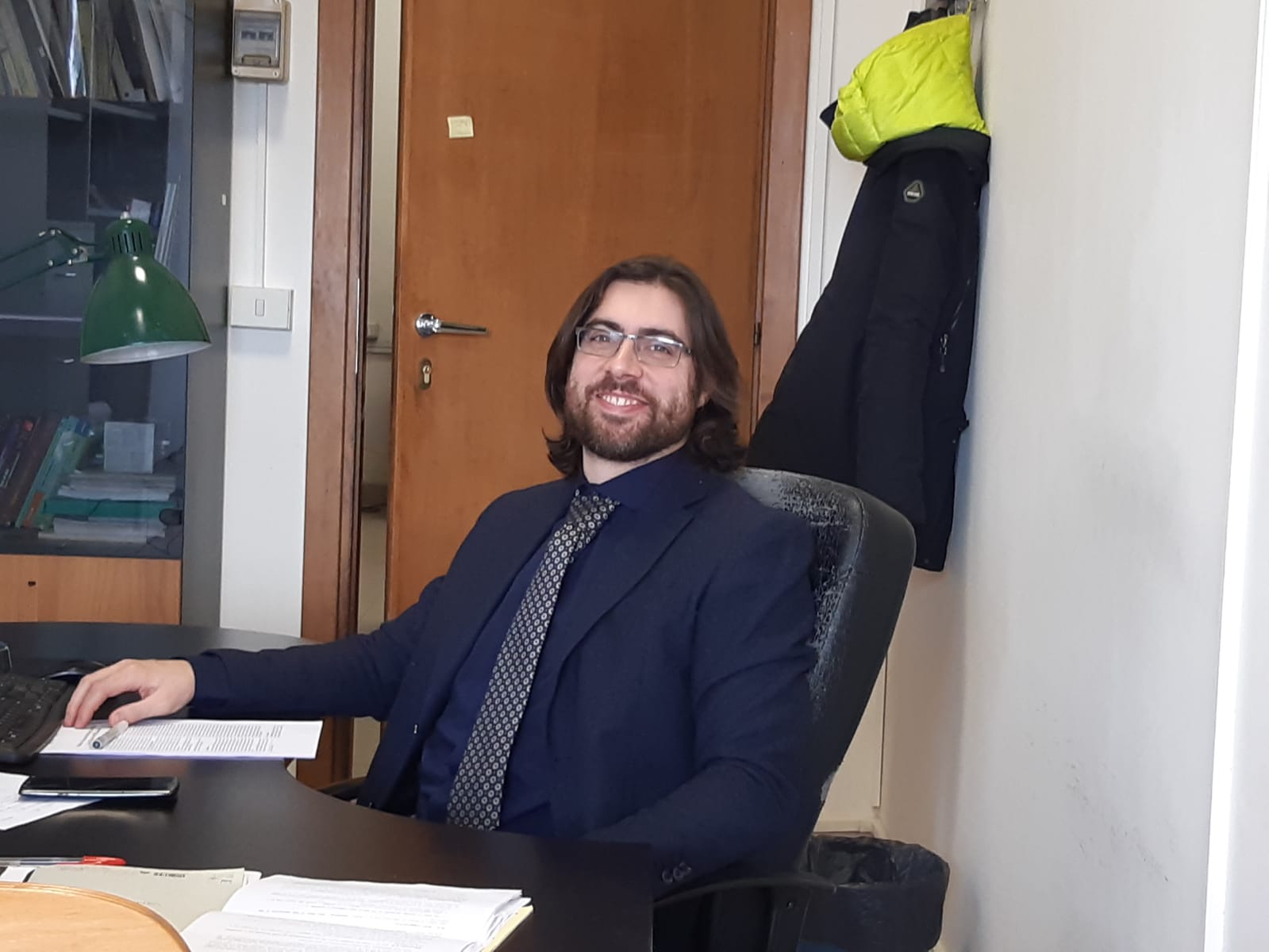
I got my PhD at the Department of Computer Science of University ``La Sapienza'' in Rome in 2009, advised by Prof. Nicola Galesi. After that I bounced around in Europe (and even further) for postdocs and visiting positions between 2011 and 2017, in particular Prague, Stockholm, Tokyo and Barcelona, where I honed my research skills in complexity theory and proof complexity. After that in 2017 I joined the Department of Statistical Science of Sapienza in Rome, where I have been an associate professor since 2020.
My research Interests are in computational Complexity. Since the very beginning of computer science, the efficiency of computation has been a central topic. Concrete applicability of a computational method is heavily influenced by differences in the required resources (e.g. running time and memory space). The field of Computational complexity is an highly dynamic and young field. Major questions have not yet been solved and we aren't even close to spot their weak points. Nevertheless the search of new mathematical tools and strategies brought to light an impressive amount of results about connections with cryptography, interactive systems and the nature of randomness. The study of Computational complexity is part of the broad investigation in theoretical computer science. I am interested in several problems arising in this investigation. I'm also interested in general topics of discrete mathematics like Combinatorics and Graph Theory and Logic.
My specific niche of computational complexity is Proof Complexity. We all know that proving theorems is a very difficult task. The point of view of proof complexity is to study the computational issues arising in mathematical logic. The questions of the fields are:
- Do a short proof always exist for a given logical statement?
- Even if a short proof exists… how difficult is to find it?…
- … or to find a proof which is not too much longer?
An immediate observation is that we would like to prove lower bounds on the size of general proofs. Unluckily this is too much to hope for. The field focus to concrete proof systems, which are models and generalizations of theorem provers used in practice. Even in this restricted setting such questions are still relevant.
